
Coffee Roast Levels Explained: From Medium to Dark—and Where Flavored Coffee Fits In
Walk down a coffee aisle or browse a coffee shop online and you'll see plenty of descriptions: medium roast, dark roast, medium-dark, flavored coffee, Arabica, bold, smooth, rich and more.

But what do all those terms actually mean?
At The Lawman Coffee Co. in East Tennessee, we have customers who won't start their morning without a traditional cup of dark coffee—and we have a large flavored-coffee community that is always looking for the next flavor to put in their cup.
Neither group is drinking coffee the "wrong" way.
Coffee is personal. Understanding a few basics about roast levels can simply help you find the cup you enjoy most.
What Is a Coffee Roast Level?
Coffee beans don't start out brown. Before roasting, coffee beans are green and have very little resemblance in aroma or flavor to the coffee we eventually brew.
Roasting applies heat to those green coffee beans and causes a series of physical and chemical changes. As the roast progresses, the beans change color, expand, lose moisture and develop the aromas and flavors we associate with coffee.
Generally, coffee is divided into three broad roast categories:
Light Roast — Medium Roast — Dark Roast
There are plenty of variations in between, including the medium-dark territory that many coffee drinkers enjoy.
The longer and further a coffee is roasted, the more the characteristics created during roasting begin to influence the final flavor.
Light Roast Coffee
Light-roasted coffee typically retains more of the characteristics associated with the bean's origin.
Depending on the coffee, you may notice flavors described as:
-
Fruit
-
Citrus
-
Floral
-
Berry
-
Tea-like
-
Bright or crisp
Light roast generally has less of the deep roasted flavor people traditionally associate with a strong cup of American coffee.
That's not better or worse—it's simply a different style.

Medium Roast Coffee
Medium roast sits right in the middle and is one of the most approachable roast levels.
You'll commonly find a balance between the coffee bean's natural characteristics and flavors created during roasting.
Depending on the bean, a medium roast might bring out notes reminiscent of:
-
Chocolate
-
Nuts
-
Caramel
-
Brown sugar
-
Toasted grain
Medium roast can be an excellent choice for someone who wants a smooth everyday coffee without moving into the heavier roasted characteristics of a dark roast.
It also provides an excellent foundation for many flavored coffees.
More on that in a minute.
Medium-Dark Roast Coffee
Medium-dark roast begins moving toward the deeper, richer side of coffee.
The brighter characteristics found in lighter roasts generally become less prominent while flavors associated with the roasting process become more noticeable.
You might experience:
Dark chocolate • Toasted nuts • Caramelized sugar • Fuller body • Richer roasted flavors
This is a popular territory for people who say:
"I want my coffee to taste like coffee."
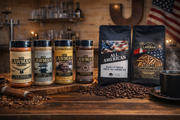
Our All American Coffee falls into that darker, smooth coffee experience that has made it our leading non-flavored coffee.
Dark Roast Coffee
Dark roast takes the roasting process further.
The flavors created through roasting become much more dominant than many of the subtle characteristics associated with the coffee's origin.
A well-roasted dark coffee can deliver a rich, full-bodied cup with notes reminiscent of dark chocolate, toasted nuts, caramelization and deeper roasted flavors.
One misconception worth clearing up:
Does dark roast have more caffeine?
Not necessarily.
A darker flavor doesn't automatically mean substantially more caffeine. Roast level, bean type, how the coffee is measured and how it is brewed all play roles in the amount of caffeine that ultimately ends up in your cup.
Bold flavor and caffeine content aren't the same thing.
So Where Does Flavored Coffee Fit In?
This is where coffee gets fun.
We have a large flavored-coffee community at The Lawman Coffee Co., and flavored coffee continues to be an important part of what we offer.
Flavored coffee starts with coffee.
The underlying roast still matters because it creates the foundation that the added flavor has to work with.
A medium-roasted coffee, for example, can provide enough traditional coffee character to stand on its own while allowing flavors such as vanilla, caramel, maple, rum or other profiles to come through without competing against an extremely heavy roast.
Think about it a little like cooking.
You want the ingredients to complement one another rather than having one completely overpower everything else.

Why Do People Love Flavored Coffee?
Sometimes you want a traditional cup of coffee.
Sometimes Butter Rum sounds better.
That's really what it comes down to.
Flavored coffee gives coffee drinkers an enormous amount of variety without giving up their morning coffee ritual.
Our flavored-coffee customers have gravitated toward profiles such as Butter Rum, Maple Bourbon, Salted Caramel, Bourbon Pecan, Cinnamon Roll and Dubai Chocolate.
Each creates a completely different drinking experience from the coffee underneath it.
Our Butter Rum, for example, combines the character of aged rum with creamy vanilla. Maple Bourbon heads in another direction with maple sweetness, vanilla, caramel and smoky oak characteristics. Salted Caramel gives you that familiar sweet-and-salty combination.
Same morning ritual.
Completely different cup.
And judging by our flavored-coffee community, plenty of people like having choices.
Does Flavored Coffee Have Sugar in It?
This is another question worth asking when shopping for flavored coffee.
The words Butter Rum, Salted Caramel or Cinnamon Roll certainly sound like something coming from the dessert table.
But the flavor profile of a coffee and what you actually add to your cup are two different things.
That's also why someone who enjoys sweet-tasting flavor profiles doesn't necessarily need to turn their coffee into a sugar-loaded drink.
How much sugar, milk or creamer eventually goes into the cup is up to the person drinking it.
Does Flavored Coffee Still Taste Like Coffee?
It should.
The goal isn't to completely hide the coffee.
A good flavored coffee should allow you to experience the underlying coffee while adding another layer of aroma and flavor.
That's one reason the roast used underneath the flavor matters.
Some people want the flavor to be subtle. Others open the bag and want to immediately smell maple, vanilla, caramel or rum.
There is room for both.

What Roast Level Is Best?
Here's the simple answer:
The one you enjoy drinking.
If you like brighter, more origin-driven characteristics, explore lighter roasts.
If you want balance and smoothness, medium roast is a great place to start.
If you enjoy deeper chocolate, toasted and roasted characteristics, move toward medium-dark or dark roast.
And if you want your morning coffee to taste like Maple Bourbon one day and Butter Rum the next, welcome to the flavored-coffee crowd.
Coffee doesn't have to be complicated.
Understanding roast levels helps you recognize why different coffees taste the way they do, but ultimately your taste buds get the final vote.
Coffee From East Tennessee
The Lawman Coffee Co. is a small family-owned coffee company based in Maryville, Tennessee, serving coffee drinkers locally in East Tennessee and shipping throughout the United States.
We offer traditional non-flavored coffees along with a growing collection of flavored coffees in ground coffee and select K-Cup-compatible options.
Whether your morning calls for a straightforward dark roast or something with a little more personality, our philosophy is pretty simple:
Drink the coffee you enjoy.
You can explore our current coffee lineup at TheLawmanStore.com.