
Are you getting the best flavor from your morning coffee, or committing a few coffee violations without knowing it?
Let's talk about the crime scene on your kitchen counter. You pop a K-Cup into the machine, see the 6, 8 and 10 oz buttons, and choose the biggest one. More coffee, right? Not exactly. The same amount of grounds now has to flavor more water.
Whether you're brewing at 0500 before a shift or enjoying a quiet East Tennessee morning, great coffee shouldn't be complicated. At The Lawman Coffee Co. in Maryville, Tennessee, we believe life is too short to drink bitter, acidic coffee. Here's how to get more from your K-Cups, drip coffee maker, French press or pour-over.

Coffee Violation #1: Using Too Much Water for One K-Cup
K-Cups aren't the problem. Improper brewing can be. Every pod holds a limited amount of coffee. Selecting a larger brew size sends more water through that dose, often producing a weaker cup. Pods vary by brand and coffee dose, so there is no universal ideal size, but 8 oz is a useful starting point for many standard pods.
| Desired Coffee | Recommended Starting Method |
|---|---|
| 6 oz | One pod, stronger cup |
| 8 oz | One pod, everyday starting point |
| 10 oz | One pod, milder cup |
| 12 oz | Try two fresh pods, brewed separately |
| 16 oz | Two fresh pods at 8 oz each |
The Lawman's Rule: Want a bigger cup without sacrificing strength? Use more coffee, not just more water. Don't reuse a spent pod; a second pass usually yields a weak, less flavorful drink.
K-Cups offer convenience and quick cleanup. Ground coffee can be more economical when making several large mugs. We offer both because different mornings call for different methods.
Coffee Violation #2: Guessing How Much Coffee to Use

A scoop here, another there, and an extra for good measure. Then we wonder why yesterday's coffee was excellent and today's tastes like something from the evidence locker. Consistency matters.
What Is the Best Coffee-to-Water Ratio?
Start around 1 gram of ground coffee per 16–18 grams of water. For approximately 12 fluid ounces (355 grams) of water, try 20–22 grams of coffee. A kitchen scale gives the most consistent results. For everyday household measurements, start with approximately 2 level tablespoons of ground coffee per 6 fluid ounces of water.
Ground Coffee Measurement Chart
| Water | Approximate Ground Coffee |
|---|---|
| 6 oz | 2 tbsp |
| 8 oz | 2⅔ tbsp |
| 10 oz | 3⅓ tbsp |
| 12 oz | 4 tbsp (¼ cup) |
| 16 oz | 5⅓ tbsp |
| 20 oz | 6⅔ tbsp |
Tablespoons are approximate: roast and grind affect how much coffee fits in a spoon. Check whether your coffee scoop holds one or two tablespoons.
How Much Coffee for a Full Pot?
Coffee-maker cup markings vary. Some machines use 5 oz per cup; others use 6 oz. This chart assumes 6 oz per machine cup:
| Pot Size | Water | Approximate Ground Coffee |
|---|---|---|
| 4 cups | 24 oz | 8 tbsp (½ cup) |
| 8 cups | 48 oz | 16 tbsp (1 cup) |
| 10 cups | 60 oz | 20 tbsp (1¼ cups) |
| 12 cups | 72 oz | 24 tbsp (1½ cups) |
Prefer Mild or Strong Coffee?
| Strength | Ground Coffee per 6 oz Water |
|---|---|
| Mild | 1½ tbsp |
| Standard | 2 tbsp |
| Strong | 2½ tbsp |
If coffee tastes weak, try a little more coffee. If it tastes bitter, harsh or sour, also consider grind size, extraction and brewing temperature before changing the dose.
Coffee Violation #3: Ignoring the Water
Brewed black coffee is approximately 98% water. Chlorine odors, mineral flavors and other off-tastes can affect the finished cup. Use clean, fresh water that tastes good. Consider a filter if needed, avoid excessively hard water, and follow your machine's water-filter and descaling instructions.
Coffee Violation #4: Forgetting That Freshness Matters

Coffee's aroma and flavor change after roasting. Grinding exposes more surface area to oxygen, so whole beans generally hold onto their aromatic qualities longer than pre-ground coffee under similar storage conditions.
Whole bean: Ideal if you want to grind just before brewing and control grind size. Ground coffee: Convenient, no grinder required. K-Cups: Fast, consistent individual servings with minimal cleanup.
Store coffee in a tightly sealed bag or container away from sunlight, heat and moisture. A cool, dry cupboard is generally a better everyday location than a refrigerator or frequently opened freezer.
Coffee Violation #5: Using the Wrong Grind or Temperature
| Brewing Method | Starting Grind |
|---|---|
| Automatic drip | Medium |
| Pour-over | Medium to medium-fine |
| French press | Coarse |
| AeroPress | Medium-fine, depending on recipe |
| Cold brew | Coarse |
For many hot brewing methods, 195°F–205°F is a useful water-temperature range. Water that's too cool can under-extract coffee; temperature and grind both influence extraction. Boiling water doesn't automatically scorch coffee grounds. For French press, start around four minutes of steeping; for pour-over, three to four minutes total is common, depending on equipment and recipe.
Coffee Violation #6: Neglecting Your Coffee Maker
Coffee oils, old grounds and mineral deposits can build up. Wash carafes and removable baskets regularly, rinse reusable filters, and descale according to your brewer's instructions and water hardness. Clean equipment helps good coffee taste the way it should.
Now Let's Talk About the Coffee Itself
You can follow every brewing rule, but the coffee you start with still matters. The Lawman Coffee Co. is a small, family-owned coffee business in Maryville, Tennessee. We focus on smooth, flavorful, small-batch coffee. We've also invested in independent third-party testing related to mycotoxins, mold and yeast.
Not Sure Which Lawman Coffee to Try?
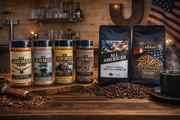
Second Amendment Medium Roast: A smooth, balanced everyday choice. All American Dark Roast: For a richer, bolder roast. Bourbon Pecan: A flavored-coffee favorite with a delicious pecan character.
Whether you enjoy traditional drip brewing, whole beans or convenient K-Cups, explore our selections at The Lawman Store.
Frequently Asked Coffee Brewing Questions
How much ground coffee should I use for 8 ounces of water?
Approximately 2⅔ level tablespoons is a household starting point. A scale and a 1:16–1:18 coffee-to-water ratio by weight offer greater consistency.
Is an 8-ounce K-Cup setting better than 10 ounces?
Eight ounces generally produces a more concentrated cup from the same pod. The best choice depends on the pod and your taste.
Can I use one K-Cup for 12 ounces?
Yes, if your machine supports it, but the result may taste weaker. Try two fresh pods separately if you want a stronger 12-ounce mug.
Why does my coffee taste bitter?
Roast characteristics, extraction, grind size, brewing temperature and equipment residue can all contribute.
Is whole-bean coffee better than ground coffee?
Whole beans typically retain aroma longer before grinding, while properly stored ground coffee remains a convenient option.
What temperature should I use to brew coffee?
For many hot brewing methods, start around 195°F–205°F.
Are K-Cups or ground coffee more economical?
Ground coffee often costs less per serving, especially when brewing multiple cups. K-Cups offer convenience and portion control.
The Final Verdict: Brew It Right, Enjoy Every Cup
Start with quality coffee, use good water, measure consistently, match the grind to your brewing method, and keep your equipment clean. Whether it's a quick K-Cup before heading out or a full pot on the weekend, a few small adjustments make a difference.
Life is too short to drink bitter, acidic coffee.
Pour it right. Drink it hot. Start your day by the book.
The Lawman Coffee Co. — Family-Owned in Maryville, Tennessee — www.thelawmanstore.com